
THE OPERATING CODE | 005
MAKE THE THINKING VISIBLE
Giving someone an answer can solve today's problem.
Helping someone understand how the answer was reached can help solve the next one.
That's where mentoring becomes development.
UNDERSTANDING GOES BOTH WAYS
Good communication starts with understanding how another person sees the situation.
What do they already know? What are they seeing? Where are they getting stuck? What are they seeing that someone else may have missed?
That's why Listen to Understand comes first.
Once people understand each other's perspective, the conversation changes. Instead of simply exchanging instructions, they can work through the reasoning together.
What are we trying to accomplish? What do we know? What have we eliminated? What are we missing? What happens next if we make this decision?
Now the thinking is visible.
DON'T JUST TRANSFER THE ANSWER
Sometimes there isn't time for a lesson.
There's a problem. The answer is known. Make the decision and keep things moving.
But when the opportunity exists, explain the reasoning behind the decision.
Experience has more value when other people can understand what that experience has taught someone to notice.
That works both ways.
The newest person on the team may see something the most experienced person missed. A foreman may understand something the superintendent doesn't. Someone in accounting may see something operations doesn't.
The title doesn't determine who has the best information.
Put the thinking on the table and let the team work with it.
PEOPLE LEARN DIFFERENTLY
Some people can hear an explanation and understand it. Others need to see it.
Draw it. Demonstrate it. Share the screen. Send the picture. Let them do it themselves.
The subject could be equipment, an Excel formula, QuickBooks, a drawing, a schedule, or an unfamiliar process.
The method isn't important. Understanding is.
And if one method isn't working, try another.
LET PEOPLE DEVELOP THEIR OWN JUDGMENT
Watching someone perform a task isn't the same as knowing how to perform it.
Eventually, people need the opportunity to take the controls themselves.
Repetition builds familiarity. Experience builds judgment.
And good mentoring gradually changes the conversation from:
“What should I do?”
to:
“Here's what I'm seeing. Here's what I've checked. Here's what I think we should do.”
That's progress.
The answer may still need adjustment. Someone may have missed something. Or they may have found a better answer.
That's part of the process.
THE GOAL
Making the thinking visible isn't about proving who is right.
It's about making knowledge transferable.
Listen to understand their thinking.
Make your thinking understandable to them.
Then work the problem together.
Over time, knowledge spreads, judgment improves, and fewer problems depend on one person having all the answers.
The strongest team isn't the one with the smartest person in the room.
It's the one where what people know doesn't stay trapped in their heads.
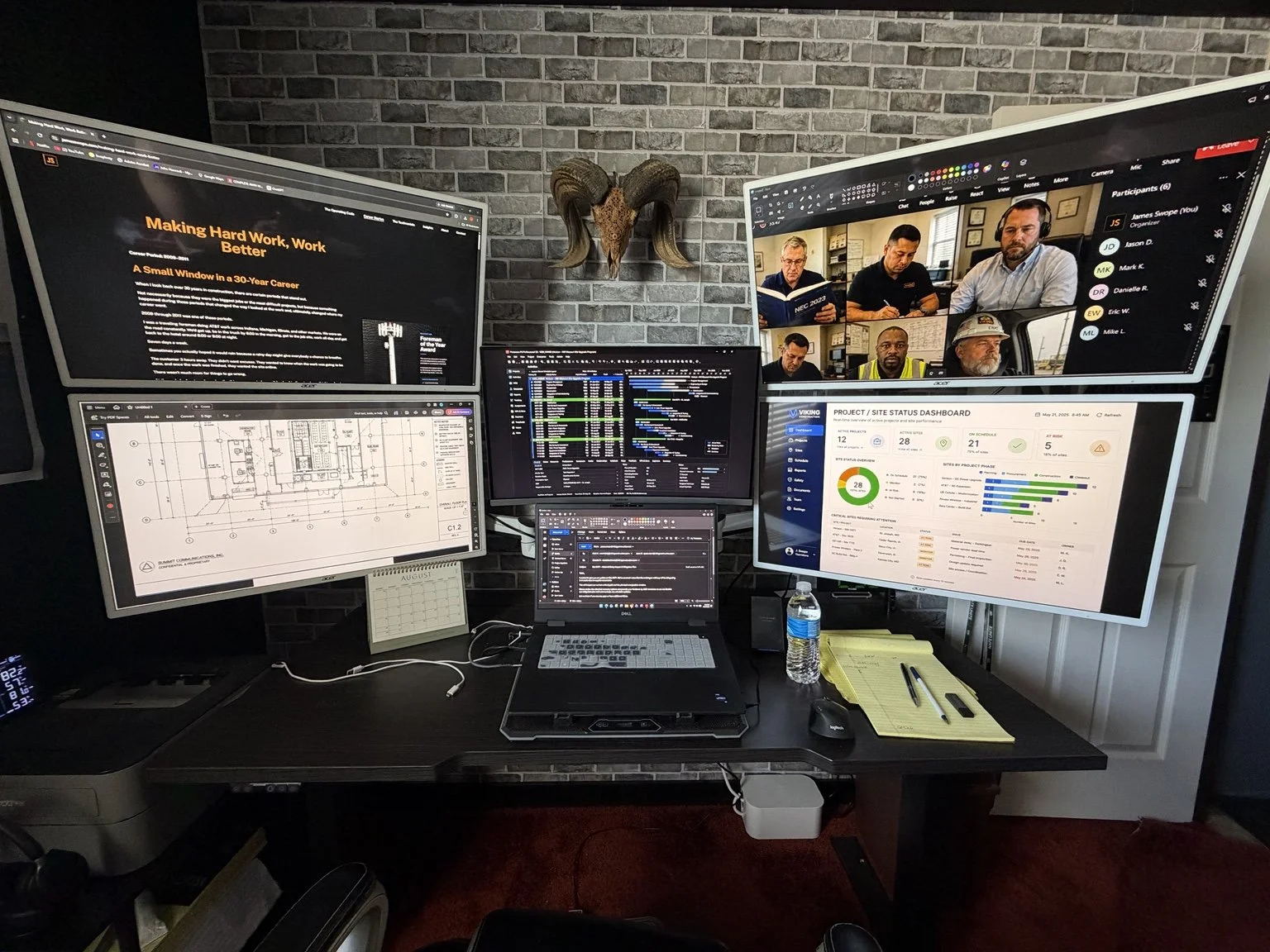
My actual home office and workstation. Screen content shown is representative of the tools and workflows I use and does not display client or proprietary project information.