
PATRÓN
In 2008, I was working for B&M in the BAWA market—Baltimore and Washington, D.C.—doing Sprint Nextel and T-Mobile upgrades.
I was still fairly new to leading cellular crews, and I was trying to prove myself. I was high-strung, demanding, and production-driven. We left at six in the morning, and a lot of days we didn't leave the site until it was dark.
I didn't take no for an answer.
If there was something that could be done while we were driving, we did it. I'd have guys in the back seat making tags, color-coding material, or assembling brackets on the way to the site. In my mind, there was always something we could be doing to get ahead.
The crew I was given had already been with the company for a few years before I got there. They were experienced tower hands. Carlos didn't speak English. Marteen didn't speak English either. Javier spoke some broken English, so most of my communication with the crew went through him.
That forced us to communicate differently.
I couldn't give Javier a five-minute explanation and expect every detail to survive the translation. Instructions had to be short and precise. Sometimes I demonstrated what I wanted. Sometimes I'd hand somebody the tools, and because they knew the work, they knew exactly what those tools meant.
Over time I picked up some job-specific Spanish. They picked up more English. And somewhere in the middle, we figured out how to work together.
One thing I remember clearly was how quiet the jobsite could be.
Those three guys could be working on a rooftop or tower, replacing antennas, running feeder, testing and completing an upgrade, and there wasn't much radio traffic. There wasn't a bunch of yelling back and forth.
They used hand signals. They watched each other. They seemed to have talked through the day's work beforehand, and once they got started, they communicated almost silently.
It was peaceful.
But there was something about that crew that used to frustrate the hell out of me.
When somebody finished what I had told him to do, he'd stop.
He wouldn't just decide what he thought should happen next and go do it. He'd come back and wait for me to give him another assignment.
And I was busy.
At the time, I remember thinking, Why do I have to keep telling you what's next? You know the work.
I understand it differently today.
They weren't inexperienced. They weren't lazy. And they weren't incapable of seeing what needed to be done.
They were waiting to know what I wanted done next.
They respected the chain of command.
Today I manage that completely differently. Before somebody finishes his current task, I'm already communicating what comes next.
“When you're finished with this, you're going over there and doing this. But before you leave what you're working on now, come get me. I want to look at it first.”
Now the person knows what's coming. The work doesn't stop while he looks for me, and I still have the quality-control point before we move forward.
I didn't understand all of that in 2008.
Back then, I was trying to get the site done and get to the next one.
And the language barrier made it even harder. Almost everything had to travel through Javier. There wasn't room for a long explanation about why I wanted something done a certain way or how three future tasks fit together. Too much information could overload the one person responsible for carrying it to everybody else.
So we adapted.
Short instructions. Demonstrations. Tools. Hand signals. A few Spanish words. A few English words.
And work.
Running that crew also didn't end when we left the site.
They didn't have driver's licenses, so every Friday around payday, I'd take them to the Mexican store. They could send money home, get their groceries and take care of what they needed to take care of.
The company had us staying in apartments. They'd invite me over sometimes and cook dinner. They'd ask me questions about English words or things they didn't understand.
They were good guys.
Somewhere along the way, they started calling me something.
“Patrón.”
I didn't know what it meant.
Finally, I asked them.
“What does that mean?”
“Boss.”
Okay.
Patrón it was.
We ran with it.
They'd yell “Patrón” from somewhere on a rooftop, and I'd answer. Eventually it became normal enough that I stopped thinking much about it.
Then I changed markets.
Later, somebody who hadn't been part of that original crew called me Patrón.
That caught my attention.
How the hell did you know that?
Apparently, the name had traveled.
Over the years, people who knew me from that period kept calling me Patrón. Eventually it ended up on awards. Today it's on the front license plate of my truck.
Looking back at that crew now, I see things I couldn't see then.
I see three experienced tower hands who had already developed their own way of communicating and working together.
I see a young foreman who thought leadership meant pushing harder, keeping everybody moving and getting to the next site.
And I can see some of the beginnings of things I wouldn't fully understand until years later—making the next task visible, communicating before the work stops, respecting the chain of command, keeping instructions clear, and understanding that sometimes the problem isn't that somebody doesn't know what to do.
They just don't know what you want them to do next.
I learned a lot after 2008.
But there's something fitting about what happened back then.
I was young, ambitious, and trying like hell to make a name for myself.
I didn't know the crew was going to give me one.
PATRÓN.
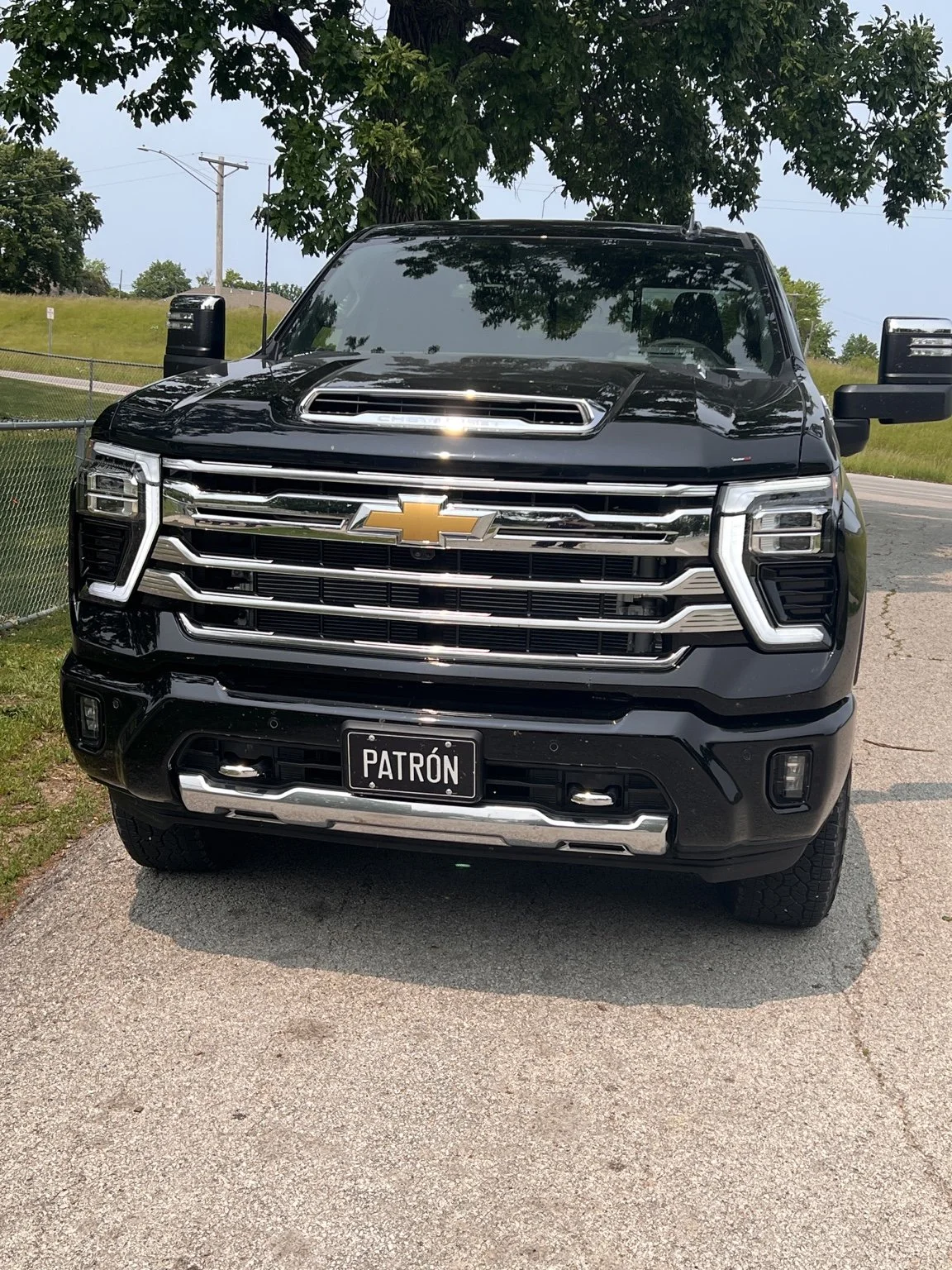
Eighteen years later, I still carry the name.